


Starting a dental practice in Dubai takes more than good equipment and qualified staff. Interior design is one of the pieces that needs attention early, especially once radiology equipment enters the picture. Dental X-ray units, CBCT machines, and imaging rooms all fall under radiation safety regulations that get checked during approval, separately from anything DHA reviews on the clinical side.
Many clinic owners plan layout and finishes without realizing how those choices affect FANR Approval. For dental clinics, Dental Clinic Interior Design and radiation compliance are tightly linked. At Ontime Healthcare, Dubai, we help dental professionals plan spaces that meet radiation safety standards and move through approval without repeat submissions.
How FANR Compliance Differs from DHA Compliance
It’s worth separating these two clearly, because clinics often treat them as one process. DHA reviews the clinic as a working healthcare environment: clinical flow, infection control, room sizing, accessibility. FANR, the Federal Authority for Nuclear Regulation, reviews something narrower and more technical: how radiation-producing equipment is installed, shielded, and controlled.
A clinic can pass DHA’s design review and still fail FANR assessment if the imaging room wasn’t planned with radiation protection in mind from the start. The two approvals run on different criteria, different documentation, and often different timelines, so a Dental Clinic Interior Design plan needs to satisfy both independently rather than assuming one covers the other.
Why Interior Design Matters for FANR Approval
FANR reviews how radiation-related equipment is placed and protected inside the facility. Interior design directly affects shielding, room separation, and safety signage, all of which get assessed against the technical drawings submitted at application.
In dental clinic interior planning, imaging rooms need correct wall construction, controlled access points, and clear positioning of the X-ray or CBCT unit relative to operator and waiting areas. When design work moves ahead without this in mind, clinics usually end up making changes after the fact, which costs more time than planning for it upfront.
Radiation Safety Requirements FANR Reviews in Detail
FANR assessment goes beyond a general layout check. For dental radiology rooms, expect scrutiny on:
- Radiation Safety Officer (RSO) designation: Every facility operating X-ray or CBCT equipment needs a named RSO responsible for compliance, whether that’s the practicing dentist or a designated staff member with the right training.
- Shielding specifications: Walls, doors, and viewing windows around the imaging room need lead-equivalent shielding sized to the equipment’s output and the room’s occupancy on the other side.
- Operator positioning and control: The operator’s position during exposure has to be shielded or positioned outside the direct beam, with a clear line of sight to the patient.
- Controlled access and warning signage: Imaging rooms need restricted access during exposure and visible radiation warning signage at entry points.
- Personnel dosimetry: Staff working near radiation sources typically need personal dosimetry badges monitored on a regular cycle.
- Equipment registration and periodic QA: Each X-ray or CBCT unit has to be registered with FANR and undergo periodic quality assurance checks to confirm output stays within approved limits.
Dental Clinic Interior Design that accounts for all of this from the drawing stage avoids the rework that comes from retrofitting shielding into a space that wasn’t built for it.
Role of Clinic Fit Out in Radiation Safety
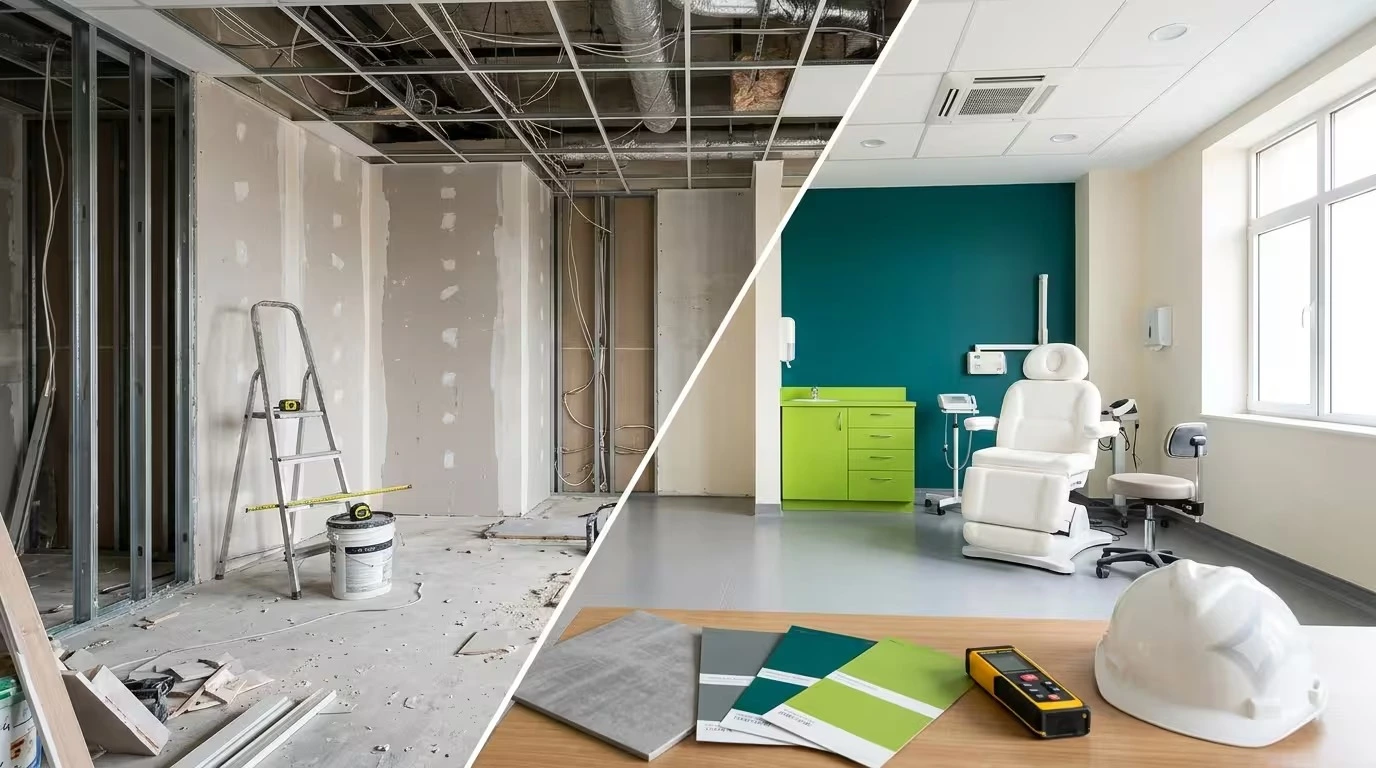
The fit out stage is where approved drawings become a real space, and it’s critical for FANR compliance specifically. Shielding materials, lead lining, and door specifications all have to match what was approved on paper, down to the material grade.
Any deviation during fit out, a swapped door type or a thinner wall than specified, can trigger rechecks or updated submissions. Close coordination between designers, contractors, and healthcare consultants keeps execution aligned with what FANR actually approved.
Interior Design and Workflow Balance
Dental clinics need smooth flow between consultation rooms, imaging areas, and treatment spaces, and radiation safety can’t come at the cost of that flow. Imaging rooms should sit where they limit unnecessary exposure and preserve privacy, without forcing patients or staff through awkward detours to reach them.
Controlled access protects patients, staff, and visitors alike, and it reflects directly on how prepared a Dental Clinic Interior Design plan looks during FANR review.
Documentation Linked to Interior Planning
FANR approval isn’t only about the physical space. It includes technical drawings, shielding calculations, and radiation protection details that have to match the final built environment exactly. A design that changes on-site without updated documentation creates a mismatch FANR will flag.
Interior design drawings form a core part of the approval submission when opening a dental clinic in Dubai. Keeping documentation and execution consistent is what supports faster clearance instead of repeat review cycles.
Also Read:Healthcare Digital Marketing Agency in Dubai: Services to Expect
Why Early Design Review Saves Time
Many clinics pursue FANR clearance only after interiors are finished, which usually means revision requests once the shielding or layout doesn’t hold up. Reviewing the design against FANR’s requirements early avoids that entirely.
At Ontime Healthcare, we assess Dental Clinic Interior Design at the planning stage, before construction locks anything in. This gives clinics a clear path into execution instead of discovering shielding gaps after the walls are built.
Support from a Healthcare Consultancy
Healthcare consultancies connect design decisions with what regulators actually expect. Our role is guiding clinics through radiation-specific planning, documentation, and inspection readiness in a structured way, alongside the separate DHA process running in parallel.
We support dental clinics by:
- Reviewing interior layouts against FANR’s radiation safety criteria
- Coordinating with fit-out teams on shielding specifications
- Preparing FANR submission documentation
- Aligning radiology room design with the wider DHA licensing timeline
Start Your Dental Clinic Setup the Right Way
If you’re planning or reviewing your dental clinic in Dubai, Ontime Healthcare’s FANR Approval team can guide you through radiation-safe interior planning, shielding documentation, and approval coordination from day one.
Speak with our team today to build a clinic that clears both FANR and DHA review without unnecessary rework.
Frequently Asked Questions
1. Is FANR approval required for dental clinics?
Yes. Any dental clinic using X-ray or CBCT imaging equipment needs FANR clearance before that equipment can be used on patients.
2. How is FANR approval different from DHA approval?
DHA reviews the clinic’s overall layout, safety, and clinical flow. FANR reviews only the radiation safety aspects of imaging equipment and rooms, and the two processes run independently.
3. Does interior design affect FANR approval?
Yes. Room layout, wall shielding, door specifications, and access control are all directly reviewed as part of FANR assessment.
4. What is a Radiation Safety Officer and is one required?
An RSO is the person responsible for radiation compliance at the facility. FANR requires every clinic operating imaging equipment to designate one.
5. When should FANR planning begin?
During the design stage, before fit-out work starts. Planning shielding and room layout early avoids retrofitting later.
6. Can fit-out changes affect FANR approval?
Yes. Any deviation from the approved shielding specifications or room layout can trigger a recheck or require updated documentation.
7. Do all imaging rooms need the same level of shielding?
No. Shielding requirements depend on the equipment’s output and the occupancy of adjoining spaces, which is why technical drawings are assessed individually.
8. Is personnel dosimetry required for dental clinic staff?
Staff working near radiation sources typically need dosimetry badges monitored on a regular cycle as part of ongoing compliance.
9. Does FANR-approved equipment need ongoing checks after installation?
Yes. Registered equipment typically requires periodic quality assurance testing to confirm it continues operating within approved limits.
10. Can a healthcare consultancy support dental clinic FANR compliance?
Yes. A consultancy can review layouts against FANR criteria, coordinate shielding specifications with fit-out teams, and prepare the required submission documentation.