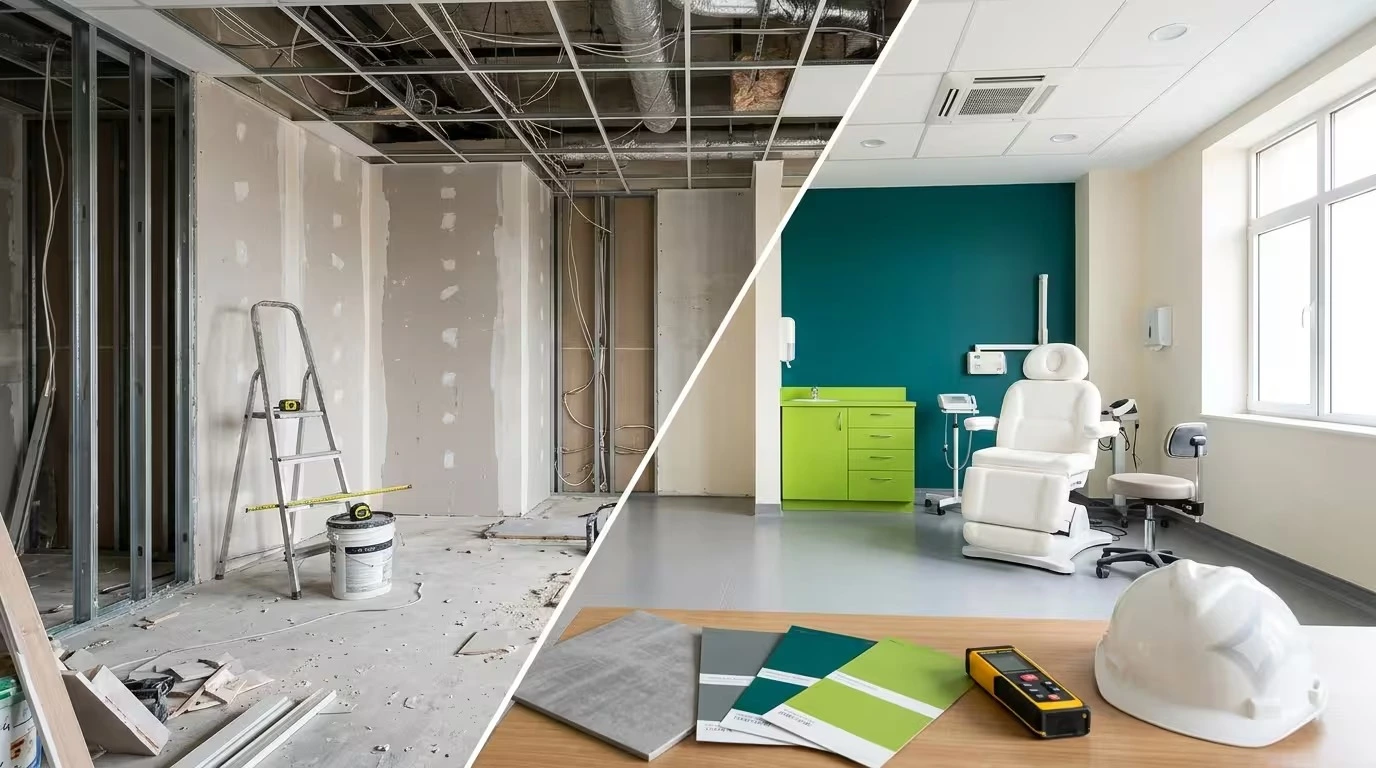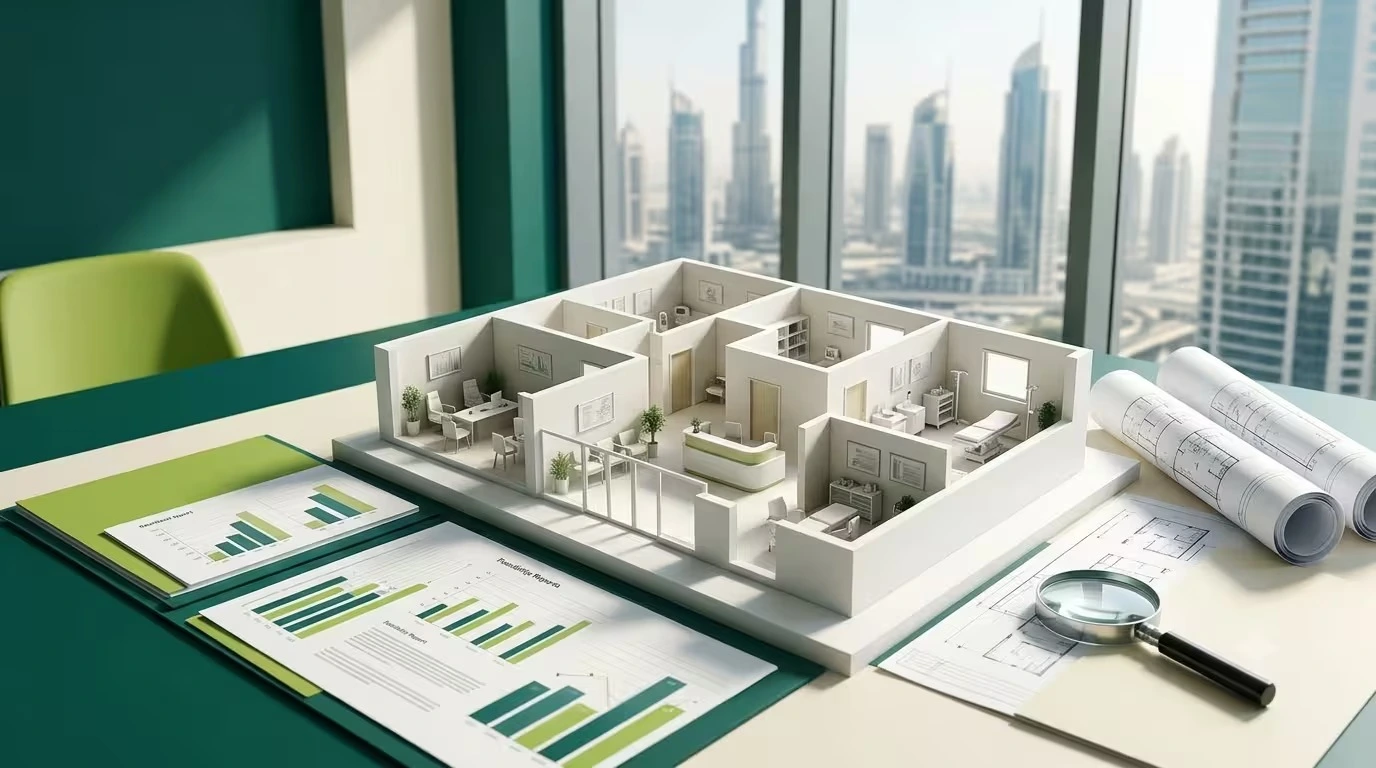



Both aesthetic clinics and standard medical facilities need to look professional and function well, but the design brief behind each is genuinely different. A Medical Clinic Interior is built around clinical workflow, infection control, and DHA compliance first, with comfort layered on top. An aesthetic or beauty clinic starts from the opposite direction: comfort and brand experience come first, with compliance still non-negotiable underneath it. Confusing the two briefs is one of the more common reasons a clinic interior ends up looking right but functioning wrong.
Here’s where the two actually diverge, side by side.
Aesthetic Clinic vs. Medical Clinic Interior: A Direct Comparison
| Design Factor | Aesthetic / Beauty Clinic | Medical Clinic Interior |
| Primary goal | Sensory experience, brand perception, relaxation | Clinical efficiency, safety, patient flow |
| Layout priority | Lounge zones, soft partitions, retail or product displays | Reception → triage → consultation → treatment → discharge, with sterilisation zones |
| Lighting | Warm, ambient, indirect, mood-driven | Task-accurate in treatment areas, calmer in waiting zones |
| Materials & finishes | Higher-end textures, natural materials, softer surfaces | Hygienic, easy-to-clean, durable surfaces that meet infection-control standards |
| Compliance focus | DHA aesthetic facility standards, still required but lighter-touch | Full DHA facility compliance, equipment planning, emergency access |
| What builds trust | Luxury, privacy, transformation | Transparency, cleanliness, clinical clarity |
| Typical client expectation | Feeling pampered and confident | Feeling safe, informed, professionally cared for |
The short version: an aesthetic clinic interior is designed to feel like a premium experience, while a Medical Clinic Interior is designed to function correctly under regulation first, and feel welcoming second. Both matter. They just aren’t interchangeable design briefs.
Where the Differences Actually Show Up
Experience Versus Clinical Efficiency
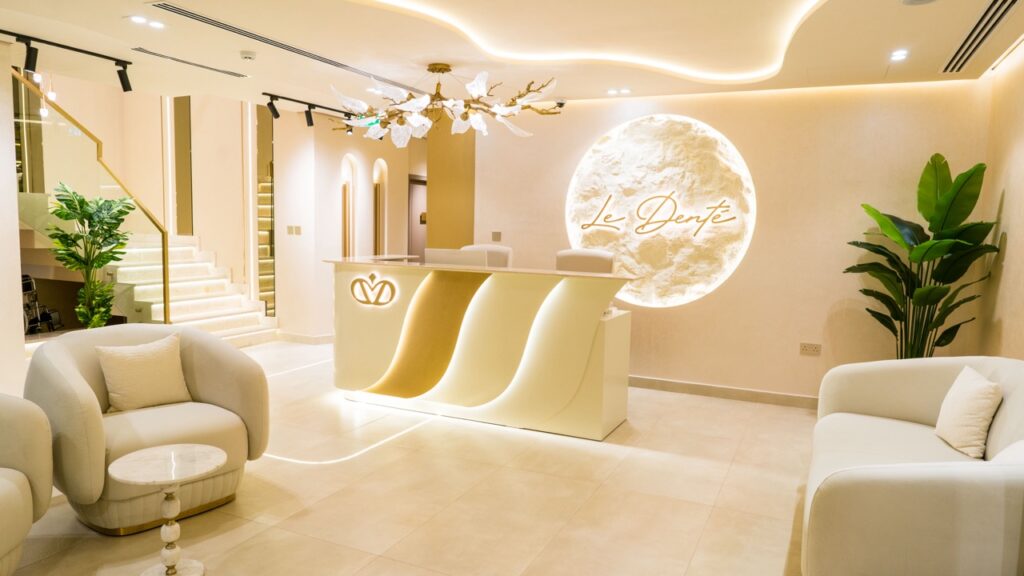
Aesthetic spaces lean on soft lighting, elegant finishes, and layouts that feel closer to a spa than a clinic. A Medical Clinic Interior, by contrast, has to optimise for patient flow, equipment access, and staff visibility, all while still meeting DHA requirements, without losing sight of comfort entirely.
Layout and Flow
In an aesthetic clinic, treatment rooms can afford softer partitions and more flexible zoning around lounge and retail areas. A medical clinic doesn’t have that flexibility: the flow from reception to triage to consultation to treatment to discharge has to be efficient and compliant, with sterilisation zones and emergency access built in from the start, not adjusted after the fact.
Materials and Compliance
A beauty clinic interior can prioritise natural materials and warmer textures because infection control requirements are lighter. A Medical Clinic Interior has far less flexibility here: flooring, wall surfaces, and finishes all need to meet hygiene and durability standards that hold up under daily clinical use, not just look good on day one.
Internal reading: if you’re planning a larger facility rather than a single clinic, our breakdown on personalised hospital interiors in Dubai for 2026 covers how these same principles scale up across a multi-department hospital.
Why the Same Firm Should Handle Both
Getting an aesthetic clinic’s atmosphere right while still meeting DHA requirements takes a team that understands both briefs, not one that’s strong on styling and weak on compliance, or the reverse. OnTime Healthcare designs both Medical Clinic Interior projects and aesthetic clinic spaces, backed by the same regulatory experience across DHA approvals, MEP design, and equipment planning either way.
See the full process in our Architectural and Interior Designs services.
Conclusion
Choosing between an aesthetic clinic interior and a Medical Clinic Interior brief isn’t about picking a style; it’s about matching the design to what the facility actually needs to do and what regulations it has to meet. OnTime Healthcare handles both as one process, so whether you’re building a boutique aesthetic clinic or a full medical facility, the design and the compliance move together instead of getting reconciled after the fact.
FAQs
1. What’s the core difference between an aesthetic clinic interior and a medical clinic interior?
Aesthetic clinics prioritise sensory experience and brand perception; a Medical Clinic Interior prioritises clinical workflow, hygiene, and DHA compliance, with comfort layered on top rather than leading the design.
2. Do aesthetic clinics need to meet DHA compliance too?
Yes. The compliance requirements are generally lighter than a full medical facility, but they’re still mandatory, not optional.
3. Can one design firm handle both an aesthetic clinic and a medical clinic project well?
It depends on whether the firm actually has regulatory design experience alongside the aesthetic side. Styling expertise without compliance knowledge usually means expensive rework later.
4. Does a medical clinic interior have to look clinical and cold?
No. Compliance sets the baseline requirements, but layout, lighting, and finishes can still be designed for patient comfort within those constraints.
5. Should hospital interiors follow the same comparison as clinics?
The same underlying principles apply but at a larger scale, with more departments and zones to coordinate. See our guide on personalised hospital interiors in Dubai for 2026 for that scope.