

Getting a Setup Medical Clinic in Dubai project across the finish line takes more than paperwork. It requires a specific set of licenses and permissions, each issued by a different Dubai authority, each authorizing a different part of your operation. This is worth separating clearly from the documents you submit to get them: documents are what you hand over, licenses and permissions are what you receive back, and each one lets your clinic legally do something it couldn’t do before.
If you’re still gathering the paperwork itself, our companion guide covers that ground in detail: Documents Required to Open a Clinic in Dubai: Complete Checklist. This guide picks up from there and focuses on the actual approvals your Setup Medical Clinic in Dubai project needs before it can open.
The Licenses and Permissions Your Clinic Needs
1. DED Trade License
Every business operating in Dubai needs a trade license from the Department of Economy and Tourism (DET), or the equivalent free zone authority if you’re setting up in a zone like Dubai Healthcare City. This authorizes your entity to legally operate and confirms zoning compliance for your chosen location.
2. DHA Facility License
This is the core healthcare authorization for any Setup Medical Clinic in Dubai project, issued by the Dubai Health Authority. It confirms your clinic meets required medical safety standards across infrastructure, hygiene and sanitation protocols, and medical waste disposal compliance. It’s issued in two stages: an inactive license after initial approval, then an active license once your final inspection passes.
3. DHA Professional License for Practitioners
Every doctor, nurse, and healthcare professional working in your clinic needs their own individual license, separate from the facility’s license. DHA evaluates each professional’s qualifications, certifications, and clinical experience before issuing it. Our Professional Licensing page covers this process in full.
4. Drug and Pharmacy License
If your clinic includes an in-house pharmacy or dispenses medication directly, you need a separate pharmacy license alongside your facility license. This covers safe storage, prescription handling, and controlled substance compliance under UAE drug regulations.
5. Dubai Civil Defence Fire and Safety NOC
Clinics handle electrical medical equipment and, in some cases, hazardous materials, which makes a fire safety no-objection certificate mandatory. Civil Defence inspects fire exits, extinguisher placement, and emergency protocols before and after fit-out.
6. FANR Radiation Safety License
If your clinic includes X-ray, CBCT, or any radiology equipment, you need clearance from the Federal Authority for Nuclear Regulation, separate from and in addition to your DHA facility license. This protects patients and staff from radiation exposure and is reviewed independently of DHA’s clinical inspection. See our FANR Approval guide for the full requirements.
7. Dubai Municipality Biomedical Waste Management Approval
All healthcare facilities need registered approval for handling, storing, and disposing of medical waste, from needles and syringes to other regulated clinical waste, through an approved biomedical waste management provider.
8. Dubai Municipality Building Permit
Before fit-out begins, you need a building permit covering structural integrity, accessibility compliance, and proper ventilation and space allocation. This is separate from your DHA layout approval, though both need to align with the same drawings.
Why This List Looks Different from a Documents Checklist
Each license above has its own application, its own supporting documents, and often its own authority to deal with. A Setup Medical Clinic in Dubai project that treats these as one bundled process tends to miss dependencies between them: your FANR license depends on the same engineering drawings your DHA facility license needs, and your fire safety NOC has to be re-verified once fit-out changes anything from what was originally approved.
This is where the two guides work together. The documents checklist tells you what to gather and submit. This guide tells you what each submission is actually trying to secure, and why the order and dependencies between them matter.
How Ontime Healthcare Supports the Full Process
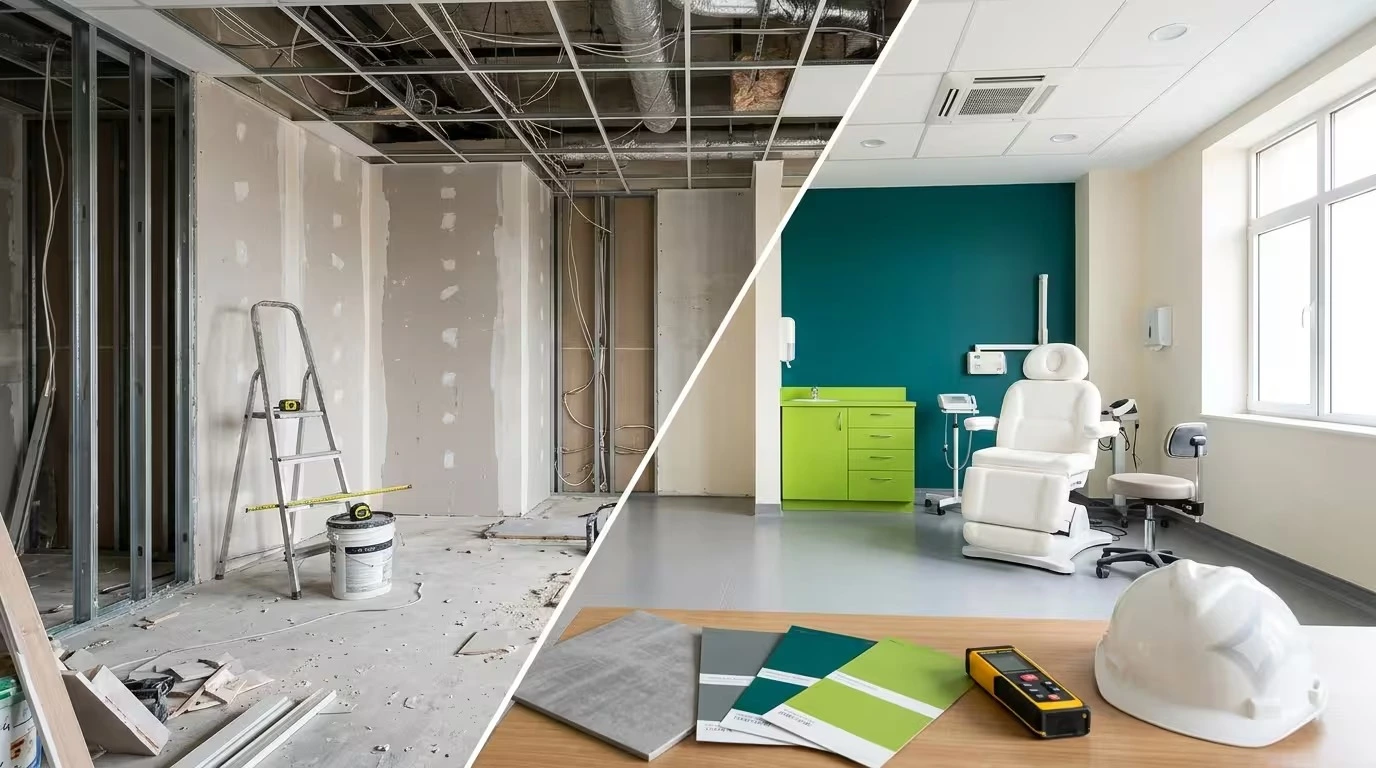
We handle the licensing and permissions side of a Setup Medical Clinic in Dubai project alongside the interior fit-out, so both stay aligned instead of running as two disconnected workstreams. Our services include:
- Regulatory compliance consultation across DHA, FANR, Civil Defence, and Dubai Municipality
- Custom clinic interior fit-out solutions matched to your approved layout
- Procurement of medical-grade furniture and equipment
- Project management to keep licensing and construction timelines in sync
Conclusion
A compliant Setup Medical Clinic in Dubai project depends on securing the right licenses from the right authorities, in the right order, alongside the documents that support each application. Ontime Healthcare manages both sides of this process so you can focus on patient care while we handle the regulatory groundwork. Get in touch to start planning your clinic today.
FAQs
1. What’s the difference between the documents checklist and this licenses guide?
Documents are what you submit; licenses and permissions are what you receive in return, each authorizing a specific part of your clinic’s operation. Both guides work together, not separately.
2. What is the first license needed to start a Setup Medical Clinic in Dubai project?
Start with your DED trade license, then move to DHA facility license applications. Most other licenses, including FANR and pharmacy, run in parallel once these are underway.
3. How long does the full licensing process typically take?
Around 3 to 6 months for a standard clinic, covering trade licensing, facility approval, fit-out, and staff professional licensing together.
4. Does every clinic need a FANR license?
Only if the clinic includes radiology or imaging equipment such as X-ray or CBCT machines. It’s a separate approval from your DHA facility license, reviewed independently.
5. Do all clinical staff need individual professional licenses?
Yes. Every practicing doctor, nurse, and healthcare professional needs their own DHA professional license, regardless of whether the clinic’s facility license is already active.
6. What safety-related licenses does a clinic need beyond DHA approval?
A Dubai Civil Defence fire and safety NOC and, where applicable, a biomedical waste management approval from Dubai Municipality, both separate from your core DHA facility license.
7. Does a pharmacy inside a clinic need its own license?
Yes. Any in-house pharmacy or medication dispensing requires a separate drug and pharmacy license alongside the facility’s main DHA license.
8. Can fit-out begin before all licenses are approved?
Fit-out generally starts after DHA issues an inactive facility license, but final activation and inspection still depend on remaining licenses, including fire safety and, where relevant, FANR clearance.
9. What happens if fit-out changes deviate from the approved licensing drawings?
Deviations can trigger a recheck across multiple licenses, since fire safety, FANR, and DHA facility approval are all reviewed against the same original drawings.
10. Can Ontime Healthcare manage licensing and fit-out together?
Yes. Ontime Healthcare coordinates regulatory compliance across DHA, FANR, Civil Defence, and Dubai Municipality alongside fit-out execution, so both stay aligned throughout the project.